China’s New Policy Towards Its Minority People Groups
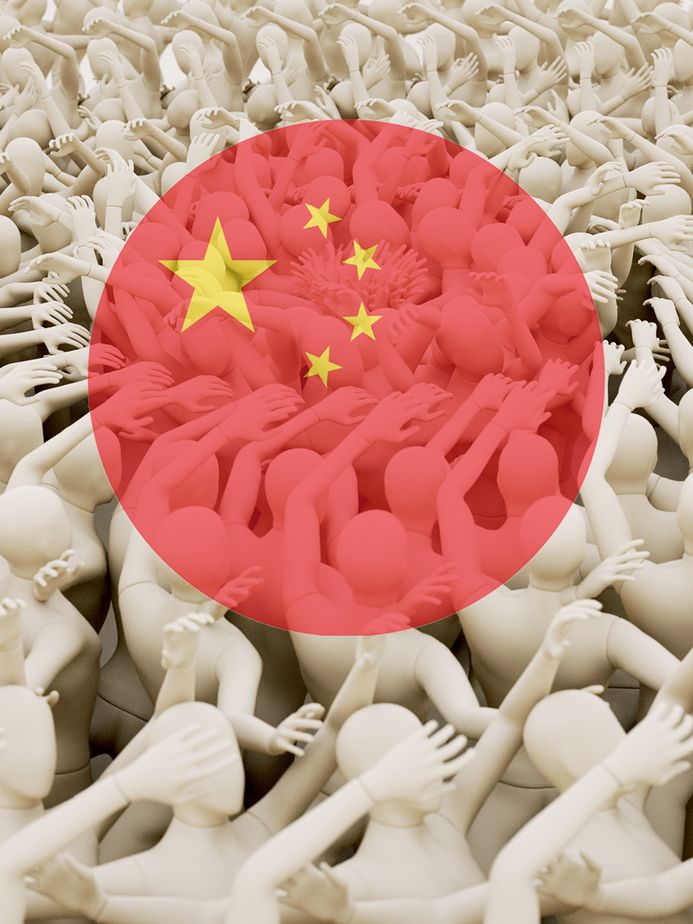
In early March, China’s National People’s Congress passed a new law on “the Promotion of Ethnic Unity and Progress.” The Chinese government stated that this new law had been in development since 2023. The law defines “the overall requirements, important principles, and responsibilities and duties of relevant entities concerning the promotion of ethnic unity and progress. It also outlines specific measures to build a common cultural home, facilitate interaction, exchanges, and integration, and promote shared prosperity and development.”
The new law significantly changes China's policy towards its minority peoples. The previous law, the 1984 Regional Ethnic Autonomy Law, stressed pluralism amongst China's minority people within a unitary State. It declared that China recognised 56 distinct ethnic groups and clearly stated minzu qubie (民族区别) — the reality of ethnic differences. It allowed autonomy as a way to protect minority cultures, languages, and customs and it warned explicitly against Han chauvinism. The basic premise of this earlier law was that China is one country composed of many ethnic groups and their differences deserved protecting.
The new 2026 law takes a very different approach. It seeks to assimilate these different ethnic groups into a single national identity defined as zhonghua minzu gongtongti (中华民族共同体) — the “Chinese national community.” It prioritizes zhulao (铸牢) (“forging”) of “the communal consciousness of the Chinese nation.” This is now the guiding principle of all ethnic policy. Thus ethnic differences are to be managed, reshaped, or reduced. In place of the warning against Han chauvinism there is to be action against “local nationalism.” This means ethnic distinctions should be softened or transformed to strengthen national unity.
In short, the law “is not merely an administrative update - it is a foundational redefinition of China’s ethnic governance. It transforms ethnic policy from a model that accommodated difference to one that actively reshapes identities in service of a one unified nation."
The new law, adopted nationally on 12 March 2026, thus marks a decisive shift in China’s ethnic governance. “The core takeaway is that the law codifies an assimilation‑first model, prioritising a unified zhonghua minzu (Chinese nation) identity over the preservation of distinct ethnic cultures.”
One significant area of enforcement will be that of language. Preschool education in the Mandarin language rather than local ethnic languages is mandated nationwide. At the same time public institutions and private firms must prioritise Chinese characters over minority languages (for example Mongolian, Tibetan, or Uyghur) in signage and public communication. The law embeds “common national consciousness” into education, religion, history and culture, tourism, media and the internet, urban planning and architecture, marriage customs and family life. This is a sweeping ideological framework that reaches into nearly every domain of public and private life.
At the same time, different clauses in the new law direct authorities to promote “transformation of customs and habits, prevent ethnic or religious barriers to marriage, even highlight Chinese cultural symbols in public spaces.” In summary, whatever ethnic autonomy remains is, in practise, subordinated to national unity goals.
The implications are already being seen. One Tibetan child refused to talk to her parents in the local dialect in which she had been raised, only speaking to them in Mandarin Chinese. This was because of the strong influence of her teacher at school.
The law reflects a deeper merger of Party ideology and state law, characteristic of governance under Xi Jinping.
Pray for the believers amongst China's minority peoples, that they will be given wisdom in handling these new realities.
Pray about the dangers of deepening resentment among minority groups and tensions in regions like Xinjiang, Tibet, and Inner Mongolia.
Pray that this new assimilation, in the sovereignty of God, will open more of China's people to the gospel of Jesus Christ.